
If you’re getting ready to sell a scrap car, you’ve probably wondered whether the battery should stay in the vehicle or come out before pickup. It’s one of those small questions that holds people up right at the end, usually when the car is already sitting in the driveway and the tow truck is booked. The good news is that it’s a simpler decision than most owners expect—but it’s worth understanding the reasoning so you can make the right call for your situation.
Does Removing the Battery Affect Scrap Car Value?
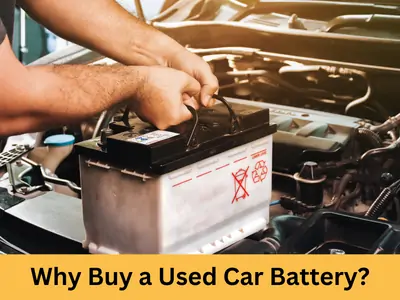
This is where people tend to overthink things. A car battery has some standalone value as recyclable material, but in the context of a whole scrap vehicle, it’s usually a small piece of the overall quote.
What most owners really want to know is how much money they’re leaving on the table by pulling the battery first. For the majority of scrap cars, the honest answer is: less than you’d think. An aging battery that’s been sitting in an old vehicle carries only a modest amount of value, and the gap between selling the car with it or without it is often small enough that it doesn’t justify the effort. Unless the battery is relatively new and in genuinely good condition, taking it out to sell on its own rarely adds up to a meaningful payday.
A few factors actually influence whether it matters:
- Battery condition: A newer, working battery has more resale or reuse value than an old, swollen, or dead one.
- Overall vehicle value: On a higher-value scrap or junk car, the battery barely moves the needle. On a stripped-down older vehicle, it can represent a slightly larger share.
- Buyer policies: Some yards factor the battery into the quote; others price the vehicle as a complete unit regardless.
- Complete vs. incomplete vehicle: Selling a car with missing components can sometimes lower the offer, since buyers price based on what’s actually there at pickup.
The practical takeaway: if your battery is ordinary and aging, removing it won’t earn you much, and leaving it in keeps the transaction simple.
What If the Battery Is Already Dead?
A dead battery doesn’t reduce your scrap car’s value in any meaningful way. Across the GTA, a huge share of the vehicles we pick up don’t start at all—cars that have been parked behind a house in Scarborough for two winters, work vans that gave out and never got fixed, sedans abandoned in a condo parking spot. A drained or dead battery is normal in this business. You don’t need to charge it, replace it, or do anything special. Just let us know the vehicle doesn’t start so the tow can be arranged the right way.
Can You Sell the Battery Separately?
Sometimes it’s worth it, sometimes it isn’t. If you have a relatively new, healthy battery that fits another vehicle you own, keeping it makes sense. Some auto parts stores and recyclers around Toronto also accept used batteries on their own, occasionally with a small core credit.
But for an old battery that’s near the end of its life, the effort of removing, transporting, and selling it separately often outweighs the small return. Weigh the time and the trip against what you’d realistically get back—for most people, it isn’t worth a special errand across town in traffic.
When Leaving the Battery Installed Makes More Sense
- You don’t have a clear use for it elsewhere
- The battery is old, weak, or already dead
- You want the simplest, fastest pickup possible
- You’d rather not deal with handling battery acid or terminals
When Removing the Battery Might Make Sense
- The battery is fairly new and works well
- You own another vehicle that takes the same battery
- You already have a separate buyer lined up for it
- You’re comfortable safely disconnecting and handling it
What Happens to the Battery After a Scrap Car Is Sold?
Once a scrap vehicle is processed, the battery is removed and sent through proper recycling channels rather than tossed out. Lead-acid batteries are highly recyclable, and responsible auto recyclers in Ontario handle them according to provincial environmental guidelines. This is part of why a battery left in the car isn’t a problem on our end—it gets directed to the right place during vehicle recycling.
Preparing Your Scrap Car for a Smooth Pickup
Here’s where the battery question fits into the bigger picture. The owners who have the easiest time selling a scrap car aren’t the ones who fuss over a single part—they’re the ones who get the basics ready before the truck arrives. A little preparation prevents the most common delays we see.
Before pickup day, it helps to:
- Confirm the location is accessible: Tow trucks need room to maneuver. If the car is boxed into a tight downtown laneway or buried behind two other vehicles, mention it ahead of time so the right equipment shows up.
- Have your ownership ready: In Ontario, you’ll generally need proof that the vehicle is yours to sell. Locate the registration or ownership document before the day of pickup rather than scrambling for it at the last minute.
- Know roughly where the car will be moved from: Street parking in parts of Toronto comes with permit and bylaw considerations, so make sure the vehicle can legally and physically be towed from where it sits.
- Remove your plates: License plates stay with you in Ontario, not the car. Take them off before the vehicle leaves.
Getting these sorted out is what turns a scrap sale from a half-day headache into a fifteen-minute handoff.
Other Things to Remove Before Scrap Car Pickup
The battery is usually the least of your worries. What people more often forget are the personal and practical items inside the vehicle. We’ve handed back wallets, found house keys under floor mats, and watched owners realize too late that something important was still in the trunk. Before pickup, do a thorough sweep and pull out:
- Personal belongings: Check under seats, in the trunk, and in door pockets.
- Documents: Old insurance slips, registration copies, and anything with personal information.
- Garage door openers: Easy to overlook, clipped to the visor.
- Toll devices: 407 ETR transponders and similar units you’ll want to keep.
- Parking permits: Residential or workplace permits that can be reused.
Take a few minutes to look everywhere. Once a car leaves on the tow truck, retrieving a forgotten item becomes a hassle for everyone.
A Simple Rule to Follow
If you’re unsure about the battery, leaving it in and letting the buyer handle it is almost always the simplest choice—and in the bigger picture, it’s a minor detail. What actually makes selling a scrap car go smoothly is having the vehicle accessible, your paperwork in order, and your belongings cleared out before the truck arrives. Sort those out, and the battery takes care of itself.
With more than 25 years in the scrap car business across Toronto and the GTA, we’ve built our quotes and pickups around making this easy—we accept all makes and models, running or not, and free towing is included no matter the condition of your vehicle.
If you have a newer battery or any other component you’re thinking about removing, reach out before you start pulling parts. We’ll tell you honestly whether it affects your quote, so you don’t waste effort for nothing.
Contact us today at 416-414-2977 for a fair quote on your scrap or junk car, free towing throughout the GTA, and a pickup that’s genuinely hassle-free.